
2026-09-03 ·
How to Document Attic Mold for Rochester Insurance Claims
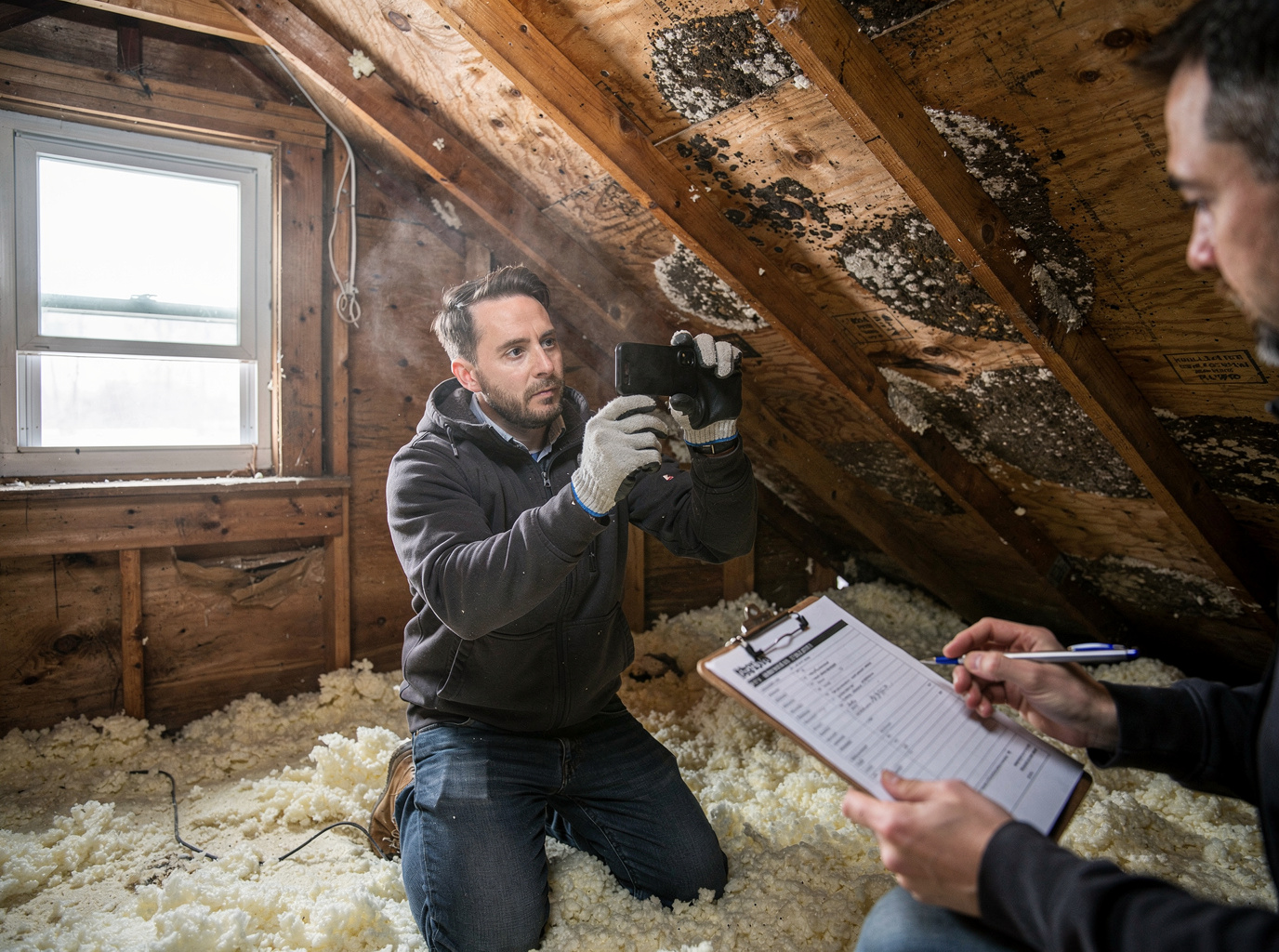
Document attic mold for a Rochester insurance claim by capturing dated photos of every stained rafter, wet insulation bag, and sheathing patch, logging moisture-meter readings in percent, noting ice-dam or roof-leak dates, and obtaining independent surface or air tests before any HEPA work or removal. Adjusters in Monroe County typically need that chain of evidence to separate a sudden covered event from long-term humidity. Homes along Park Avenue, East Avenue, and Charlotte often sit on older roofs that leak after lake-effect snow; without a paper trail, the claim stalls.
Photograph Every Surface Before Anyone Touches It
Start in the hatch and work the ridge. Shoot wide shots that show the whole bay, then close-ups of black or gray staining on the underside of the roof deck, compressed cellulose, and any rusted nails. Include a ruler or tape in at least 3 frames so scale is obvious. Photograph the roof exterior the same day: ice-dam ridges, missing shingles, clogged gutters, and chimney flashing near landmarks such as the George Eastman Museum neighborhood or streets that drain toward High Falls. Timestamp every file; phone GPS is enough if the EXIF data is left intact. Do not bag or vacuum anything first. Once material is gone, an adjuster in Brighton or Irondequoit cannot tell whether growth followed a January ice dam or years of bath-fan exhaust. Keep a printed contact sheet with file names matching your written log. If you later need a professional attic mold inspection, those same photos become the baseline the inspector will reference rather than a cleaned cavity.
Log Moisture Readings and Weather History
Buy or borrow a pin-type meter and record wood moisture at 3–5 spots per rafter bay, writing the percent next to the date. Sheathing above 16–19 percent after a thaw is a red flag in this humid continental climate with cold snowy winters. Note the storm: lake-effect bands that dump on Charlotte, freeze-thaw cycles that open flashing on East Avenue Victorians, or a March rain that sat on a low-slope roof in Pittsford. Write the indoor humidity if you have a cheap hygrometer; 50–60 percent in January usually means warm air is leaking into the attic. List any recent roof, gutter, or skylight leak sealing work and keep invoices. Carriers often deny “long-term seepage”; a dated log that ties a spike to a named storm is the difference. Store the notebook with the photos. If growth returns, compare new readings to this baseline instead of guessing. For patterns that keep coming back, see why attic mold returns in some Rochester homes.
Get Independent Testing Carriers Recognize
Photos show stain; they do not name the organism or prove it is still active. A surface swab or tape lift from the worst rafter, plus one outdoor control, gives a lab report with genus-level results. Air samples at the hatch and living space help if the claim includes occupant exposure. Do this before remediation so the lab chain of custody is clean. Monroe County adjusters are used to seeing Cladosporium on cold sheathing and Aspergillus in damp cellulose; a numbered report beats a homeowner’s guess. Keep the lab invoice and the sampler’s notes of where each cassette sat. If you already removed bags, testing is weaker, which is why documentation comes first. Pair the lab sheet with moisture source identification so the file shows both the organism and the leak path. Hours for questions are Mon–Fri 8am–6pm and Sat 9am–2pm from 1925 S Clinton Ave, Rochester, NY 14618; that is simply when the office can walk you through what the report means, not a sales pitch.
Organize a Claim Packet Adjusters Can Follow
Put the packet in one folder, digital and paper: cover letter with the date you first saw staining, the photo contact sheet, the moisture log, weather notes, lab report, and any roof or gutter receipts. Number the pages. State the address, including neighborhood (Park Avenue row, East Avenue brick, Charlotte bungalow) so the desk reviewer can picture typical 1920s–1950s stock with little ridge venting. Do not editorialize about “black mold”; let the lab and photos speak. If insulation must come out later, keep a copy of this file so replacing insulation after attic mold removal does not erase the original evidence. Submit through the carrier portal and keep the claim number on every email. If they send an inspector, walk them the same path you photographed. A complete packet will not guarantee payment, but it stops the most common delay: “we cannot see what was there before you cleaned.” That is the job of documentation in Rochester attics.