
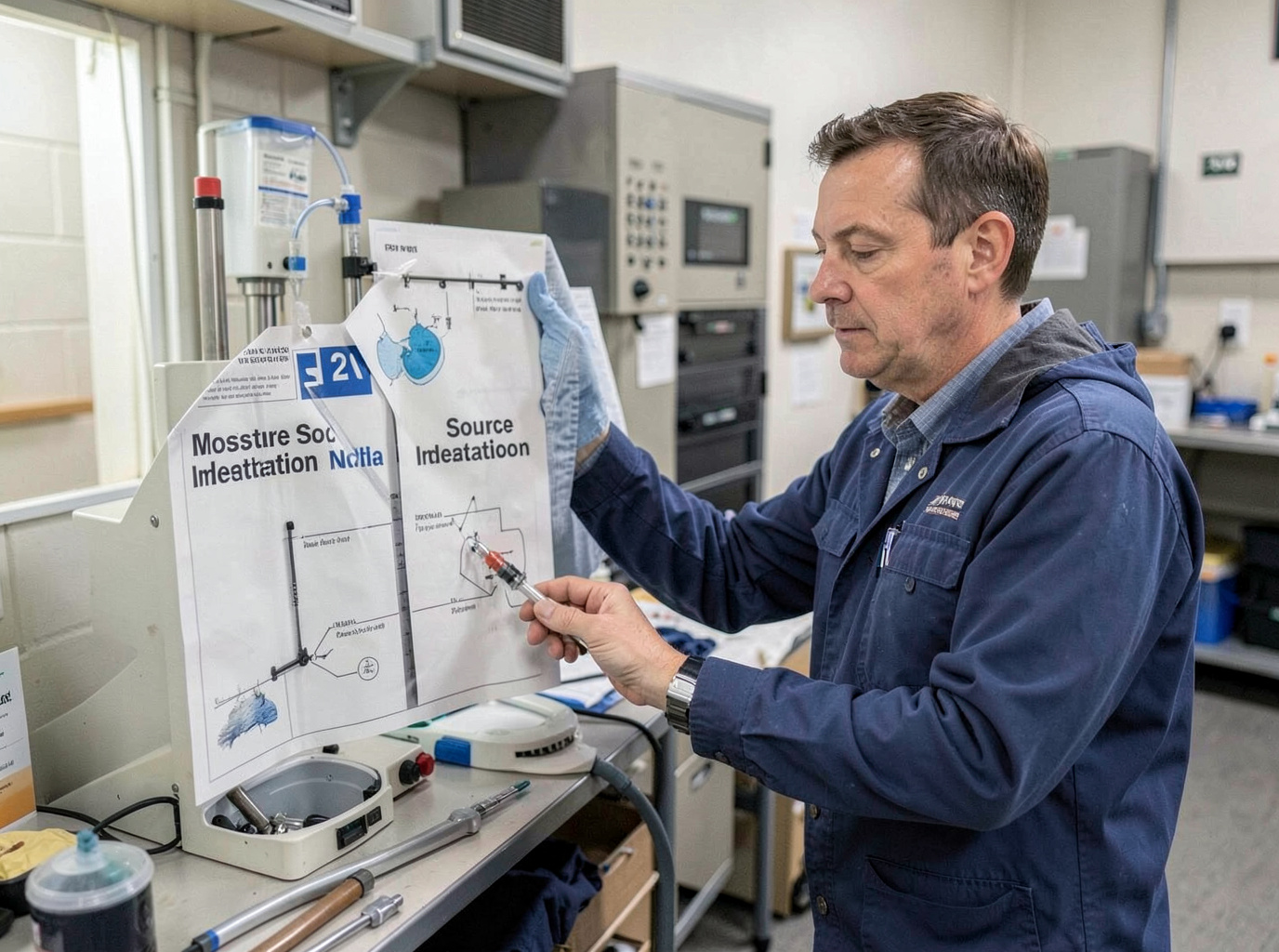
Rochester’s humid continental climate and long, snowy winters make attic moisture identification different from milder markets. Ice dams form along eaves on Park Avenue and East Avenue Victorians after freeze-thaw cycles, driving meltwater under shingles and into insulation. Older Monroe County housing stock—many homes near the George Eastman Museum or Charlotte—often has original roof decks, unbaffled soffits, and bathroom fans that dump into the attic instead of outdoors. We start by mapping temperature and humidity gradients, then follow staining, frost lines, and wet insulation back to the actual entry point rather than treating mold as the first problem.
A common miss is assuming every dark patch is a roof leak. In Irondequoit and Brighton bungalows, kitchen and bath exhaust ducts frequently terminate in the attic, adding gallons of moisture each week that condenses on cold roof sheathing once winter temperatures drop. We inspect duct runs, damper function, and termination location, then check for blocked soffit vents that starve the attic of dry air. Terrain near High Falls and the river corridor can also mean higher ambient humidity that loads attics if the vapor barrier is incomplete. Identifying the source first keeps you from ripping out insulation twice.
Code and practical notes matter here: Monroe County inspectors expect mechanical ventilation to terminate outdoors, and many 1920s–1950s attics were never designed for today’s tighter envelopes. We look for missing baffles, compressed insulation at the eaves, and chimney or plumbing-stack penetrations that open when the house settles. Warnings we give owners: do not run a dehumidifier in an unconditioned attic as a substitute for finding the leak, and do not seal every crack until we confirm where water is entering. Work is scheduled Mon–Fri 8am–6pm and Sat 9am–2pm from our 1925 S Clinton Ave shop so we can catch conditions while snow is still on the roof when needed.
Technician insight
In Rochester, the thing that catches most people out with Moisture Source Identification is ice dams on older Park Avenue and East Avenue roofs plus bath fans that still dump into the attic. Homeowners treat the mold first, then watch it return after the next thaw because the meltwater path and the indoor humidity path were never separated. We always check soffit baffles and fan terminations on Monroe County houses from the 1920s–1950s—those two details change the job more than another round of spraying.
Charlotte bungalow after a heavy snow week
Problem: black staining on the north roof deck and a musty smell after melt. We found the bath fan terminating in the attic and ice-dam staining at the eaves, not a failed membrane. We documented both sources, recommended outdoor termination and ice-and-water at the eaves, and held mold work until those were addressed so the cleanup would stick.
Moisture Source Identification Services We Offer
✓Ice Dam Moisture Mapping
We locate where meltwater from Rochester ice dams entered the attic so repairs target the eaves and valleys that actually leak.
✓Roof Leak Tracing
Staining and wet insulation are followed to flashing, valleys, and penetrations typical of older East Avenue and Park Avenue roofs.
✓Bathroom Exhaust Vent Inspection
We confirm whether bath and kitchen fans dump moisture into the attic instead of outdoors—a frequent cause in Brighton and Pittsford homes.
✓Soffit and Baffle Airflow Check
Blocked soffits and missing baffles trap humid air against cold sheathing; we document airflow paths that fail in Monroe County winters.
✓Plumbing Stack and Chimney Penetration Survey
Settling around stacks and chimneys opens gaps that admit vapor and wind-driven snow; we isolate those paths before mold work.
✓Attic Humidity and Temperature Logging
Short-term logging shows whether moisture is from indoor air, roof leaks, or both so the fix matches the source.
✓Vapor Barrier and Insulation Gap Review
Incomplete or damaged vapor control in older Rochester attics lets house air load the roof deck; we map the gaps that matter.
Moisture Source Identification Cost in Rochester, NY
| Service | Typical Range | What Affects It |
|---|---|---|
| Standard attic moisture source visit | $175–$325 | Single attic, typical access; higher if crawl-style or heavily insulated |
| Humidity logging add-on | $75–$150 | Short-term sensors when source is unclear after visual inspection |
| Multi-story or complex roof extra | $50–$125 | Valleys, multiple penetrations, or limited hatch access |
| Follow-up after roof or vent repair | $100–$200 | Confirm the source is closed before mold cleanup |
Ranges are typical for Rochester, NY and confirmed with an exact written quote before any work starts.
How it works
- 1
Walkthrough And History
We review leak timing, ice-dam history, and bathroom use, then inspect the attic from the 1925 S Clinton Ave crew’s typical access points.
- 2
Visual And Moisture Mapping
Stains, frost, wet insulation, and meter readings are mapped to roof geometry, vents, and penetrations common in Monroe County housing.
- 3
Source Confirmation
Duct terminations, soffits, flashing, and stacks are checked so we distinguish roof leaks from indoor moisture loading.
- 4
Written Findings
You get a plain-language source list and recommended next steps—repair the leak, fix ventilation, or both—before any mold removal.
Pricing
Moisture source identification is typically a flat diagnostic visit with add-ons only if extra access or logging is needed; we quote before extra work.