
2026-09-03 ·
How to Air Seal an Attic in Rochester Before Winter
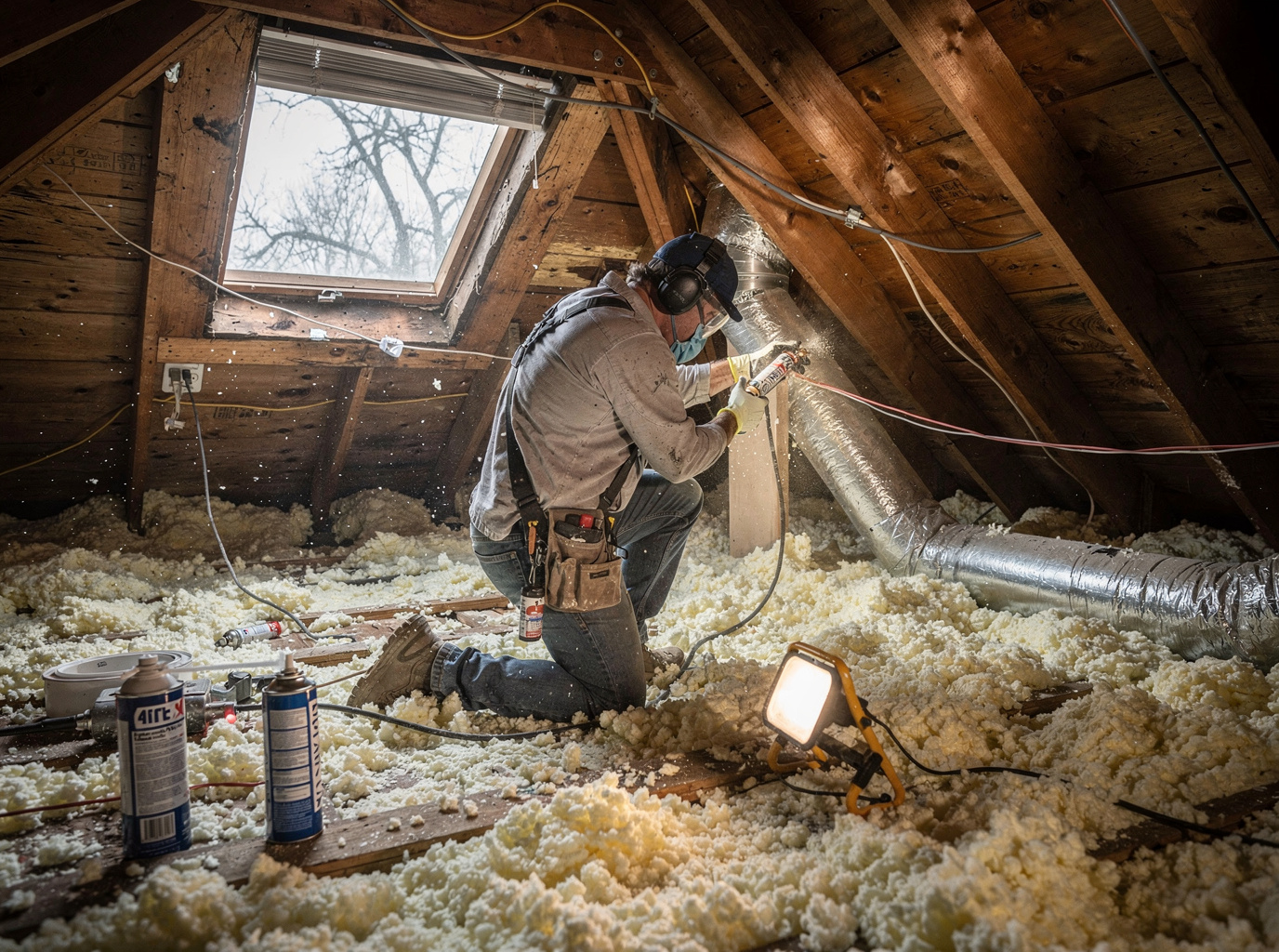
Air sealing an attic in Rochester before winter means locating and closing every air leak from the living space into the rafters so moist indoor air cannot condense on cold sheathing once temperatures drop. Plan on 4–8 hours for a typical 1,200–1,800 sq ft bungalow if you work methodically, or a full day if you also add baffles and hatch weatherstripping. The work is not insulation; it is stopping the stack-effect flow that drives ice dams on East Avenue and Charlotte roofs and later feeds attic mold. Do this while the weather is still above 40°F so foam and caulk can cure before the first heavy lake-effect snow.
Why Rochester Attics Need Air Sealing Before Snow Hits
Monroe County sits in a humid continental climate with cold, snowy winters. Warm, humid air from kitchens and baths rises through unsealed plumbing chases, recessed lights, and attic hatches, then hits roof decks that sit well below freezing. That moisture condenses, wets cellulose or fiberglass, and sets up the same conditions that later require attic mold remediation. Homes near High Falls and the Rochester Public Market often have balloon-frame walls and open soffits that act like chimneys. Park Avenue and East Avenue houses from the early 1900s add plaster-and-lath ceilings with dozens of small penetrations around knob-and-tube remnants. Brighton, Irondequoit, and Pittsford ranches from the 1950s–70s hide similar leaks at dropped soffits over kitchens. Air sealing first, then insulation, is the order that actually reduces ice-dam risk and keeps the attic dry through January. Skipping the seal and just blowing more cellulose simply buries the leaks.
Map Every Bypass in Older Monroe County Homes
Start in the living space with a flashlight and a cheap incense stick on a still evening. Look for movement at the attic hatch, around bathroom fans, and at the tops of interior walls. In the attic, pull back insulation at the perimeter and at every plumbing stack, electrical box, and chimney. Typical Rochester bypasses include 6–12 can lights per floor, unsealed bathroom exhaust boots, and the gap around the pull-down stairs. Older stock near the George Eastman Museum often has brick chimneys with 1–2 inch gaps that need fire-rated caulk plus backing rod. Photograph each leak; you will forget half of them once you start foaming. If you already see staining or a musty smell, pause and consider moisture source identification before you bury the problem. Work from the hatch outward so you do not trap yourself. Wear a respirator; decades of dust in these attics is not something you want to breathe.
Materials and Sequence That Hold Up to Lake-Effect Moisture
Use fire-rated expanding foam (the low-expansion window-and-door type) for gaps under 1 inch and backing rod plus fire caulk for larger openings. Cover can lights with airtight boxes rated for insulation contact; never foam the fixture itself. Weatherstrip the hatch with 3/8-inch closed-cell foam tape and add a rigid foam lid if the existing panel is thin plywood. Install cardboard or foam baffles at every soffit bay so you do not block intake when you later add insulation. In Brighton and Pittsford, where many roofs have shallow pitches, leave a 2-inch air channel from soffit to ridge. After foam skins over (about 30–60 minutes), you can add cellulose or fiberglass. Do not skip attic access sealing if the hatch is in a hallway; that single opening can undo an entire afternoon of work. Keep a shop-vac nearby; Monroe County attics shed decades of debris the moment you move insulation.
Common Mistakes on Park Avenue and East Avenue Roofs
Homeowners often foam the perimeter but leave the chimney and plumbing stacks open because they look “too hot” or “too tight.” Those are the biggest leaks. Another error is blocking soffit vents with leftover foam; that starves the roof of intake air and can worsen ice dams after lake-effect snow, a problem covered in Checking Attic Ventilation After Heavy Lake Effect Snow. Using high-expansion foam around windows or electrical boxes can bow drywall downstairs. Working in November when nights already hit 20°F means foam will not cure and caulk will skin over without bonding. If you find wet sheathing or visible growth, stop and address drying first; sealing a wet attic only traps moisture. Charlotte bungalows with low knee walls need extra attention at the wall-to-ceiling joint, a spot that rarely shows up in generic checklists.
When to Call for Help and Next Steps
If the attic has more than 20 recessed lights, a complex chimney, or any sign of past leaks, the job can exceed a weekend. Owner-operated crews working from 1925 S Clinton Ave, Rochester, NY 14618 keep hours Mon–Fri 8am–6pm and Sat 9am–2pm and can combine sealing with ice dam prevention when the roof already shows ice evidence. After you finish, run a bathroom fan test: with fans on, you should feel little or no air movement at the hatch. Recheck after the first thaw; spring melt in Monroe County can reveal missed gaps, a pattern discussed in Spring Thaw and Attic Mold in Monroe County. Keep leftover foam and caulk labeled; you will use them again when you add a new light or fan. Air sealing is the cheapest insurance against the freeze-thaw cycle that Rochester attics face every winter.