
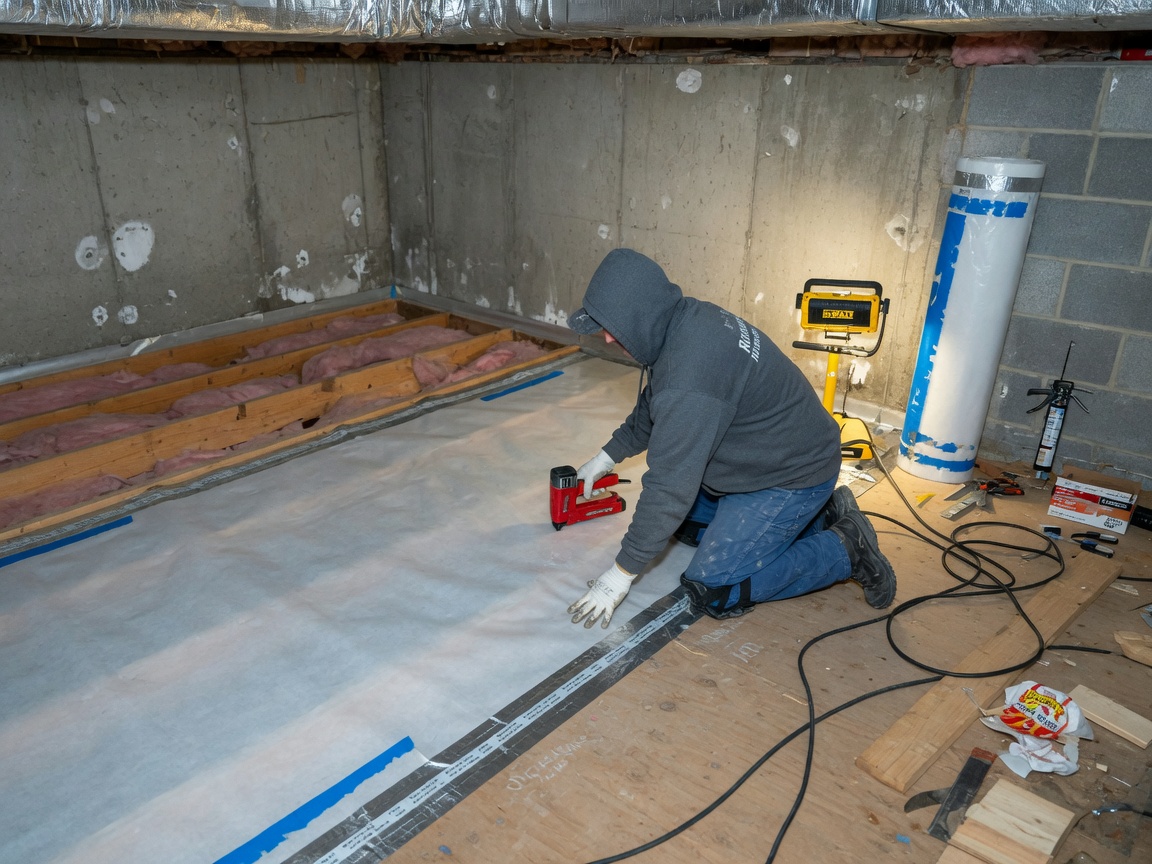
Rochester attics in Monroe County sit under a humid continental climate: cold, snowy winters drive indoor moisture up through ceilings, then it condenses on the cold underside of the roof deck. On Park Avenue and East Avenue, many houses are older wood-frame stock with original plaster, balloon framing, and little or no air sealing at the attic floor. That stack effect plus ice-dam cycles around High Falls–area roofs is why we install vapor control at the attic plane—not as a plastic tent over insulation, but as a continuous, sealed layer that keeps warm, moist air from reaching the sheathing. Charlotte bungalows and Brighton ranches fail the same way when bathroom fans dump into the attic or when recessed lights punch holes in the ceiling plane.
We specify Class I or II membranes (polyethylene or smart vapor retarders) based on roof type and whether the attic is vented. In Pittsford and Irondequoit, cathedral or low-slope sections need a different detailing than a simple gable over East Avenue. Seams get taped, penetrations get boots, and we never trap existing wet insulation—mold removal and drying come first. Monroe County winters mean we schedule around freeze-thaw so adhesives and tapes actually bond. A barrier that is not continuous at the eaves, chimneys, and knee walls is just another condensation surface. Workmanship you can inspect from the hatch is the standard we use from 1925 S Clinton Ave, with hours Mon–Fri 8am–6pm and Sat 9am–2pm.
Edge cases here include knob-and-tube still live in some Park Avenue attics, vermiculite that must stay undisturbed, and roof decks already stained from ice dams near the George Eastman Museum corridor. We do not claim licenses or warranties we were not given; we give upfront quotes and show you the plane before we close the hatch. If the roof leaks or soffit vents are blocked by insulation, a vapor barrier alone will not save the sheathing. Seasonal reality: once winter temperatures drop, any remaining air leaks show as frost on nails—those leaks get sealed before the membrane goes down.
Technician insight
In Rochester, the thing that catches most people out with vapor barrier installation is treating the attic floor like a drop cloth instead of an air-and-vapor plane. After a humid-continental winter, frost on roof nails in Park Avenue and East Avenue houses almost always traces to unsealed recessed lights and a leaky hatch—not missing poly in the middle of the bay. If you do not seal those holes first, the barrier just hides the next round of mold on the sheathing.
East Avenue condensation after ice-dam season
Homeowner called after dark stains appeared on the roof deck following a long snowy stretch. We found warm air leaking at old can lights and an unsealed hatch, with insulation pushed into the soffits. After drying and mold cleanup of the affected bays, we sealed the holes, installed a taped polyethylene plane, and restored ventilation paths. The following winter the deck stayed dry at the hatch inspection.
Vapor Barrier Installation Services We Offer
✓Attic Floor Polyethylene Vapor Barrier
Continuous 6-mil or better poly sealed at walls, hatches, and penetrations so moist indoor air cannot reach Rochester roof decks during snowy winters.
✓Smart Vapor Retarder Installation
Variable-perm membranes for mixed-climate Monroe County attics that need drying toward the interior in summer without letting winter vapor through.
✓Knee Wall and Cape Cod Barrier Detailing
Sealed barriers on sloped ceilings and knee walls common in Charlotte and East Avenue older homes where standard floor poly will not cover the plane.
✓Recessed Light and Penetration Sealing
Boots, boxes, and tape at cans, plumbing stacks, and wiring so the vapor plane stays intact in Brighton and Pittsford renovations.
✓Hatch and Access Weatherstripping with Barrier Continuity
Insulated, gasketed attic hatches tied into the vapor layer so the weakest point in Irondequoit attics is no longer a moisture chimney.
✓Post-Mold-Remediation Vapor Control
New barrier after attic mold cleanup so remaining insulation and sheathing stay dry through the next Monroe County heating season.
Vapor Barrier Installation Cost in Rochester, NY
| Service | Typical Range | What Affects It |
|---|---|---|
| Small accessible attic floor barrier | $400–$900 | Simple gable, few penetrations, easy hatch—typical Charlotte bungalow. |
| Average Rochester 1.5–2 story attic | $800–$1,800 | Park Avenue / East Avenue stock with cans, stacks, and some knee walls. |
| Complex cape, cathedral, or finished attic plane | $1,500–$3,500+ | Slopes, multiple rooms, limited access in Pittsford or Irondequoit. |
| Hatch upgrade with barrier tie-in | $150–$400 | Insulated lid and weatherstrip; price moves with custom opening size. |
Ranges are typical for Rochester, NY and confirmed with an exact written quote before any work starts.
How it works
- 1
Inspect And Moisture Check
We open the hatch, map wet spots, ice-dam staining, and air leaks typical of Park Avenue and East Avenue stock, and confirm the deck is dry enough to cover.
- 2
Prep The Attic Plane
Remove or relocate blown insulation at edges, seal large holes, and address bathroom-fan dumps so the barrier will not trap moisture already in Monroe County attics.
- 3
Install And Tape The Membrane
Lay poly or smart retarder, tape seams, boot penetrations, and tie into walls and hatches for a continuous plane from Brighton through Pittsford jobs.
- 4
Verify And Reinstate Insulation
You inspect the sealed plane, then we restore insulation depth and ventilation paths so soffits still work after Rochester winters.
Pricing
Pricing follows attic size, access, and how many penetrations and knee walls we must detail—not a one-price flyer. Older Monroe County houses with cluttered attics cost more labor than empty ranches. We quote after we see the hatch.