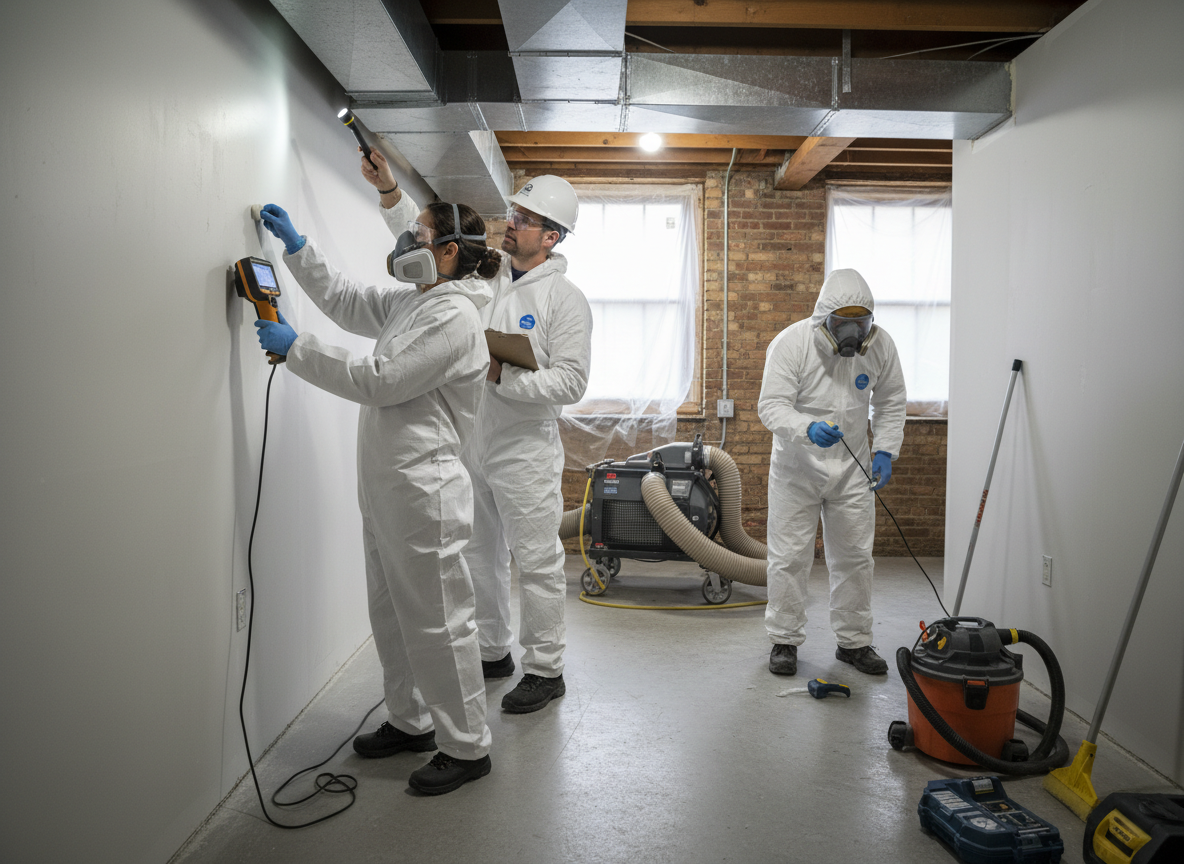
Rochester attics sit under a humid continental climate with long, snowy winters, so post-remediation verification is never just a walkthrough. After ice-dam leaks on Park Avenue Victorians or East Avenue roofs, remaining wet sheathing will grow mold again once temperatures drop. We map moisture in rafters and decking, look for missed pockets behind chimneys, and confirm the cavity has dried enough that spores cannot rebound. Homes in Charlotte and Irondequoit pick up extra lake-effect humidity; Brighton and Pittsford colonials often have tight, under-vented attics that stay cold and damp for weeks after snowmelt. Verification here has to account for that lag, not a single dry day.
Access and housing age change the job. Many Monroe County attics were built with limited hatches and blown-in insulation that hid staining until remediation started. After cleanup we re-inspect every bay, check around plumbing stacks and bathroom fans that dump moisture into the roof, and note whether soffit and ridge venting actually moves air. A failed verification usually traces to incomplete drying or a leak that was patched but not fully dried. We schedule around weekday hours at our South Clinton Avenue shop so follow-up visits can happen while the attic is still accessible and before the next storm cycle.
Sampling is used when visual and meter readings are not enough. Surface or air samples after attic work help confirm that remaining dust is not still carrying viable growth, especially in homes near the Rochester Public Market or George Eastman Museum neighborhoods where older plaster and wood hold spores. We do not treat a single sample as gospel; we pair it with moisture numbers and a second visual pass. If the attic still reads high after a cold snap, we tell you plainly rather than sign off. That honesty is what keeps the same roof from needing another round of work next winter.
Technician insight
In Rochester the thing that catches most people out with post-remediation verification is assuming a dry day in March means the attic is done. Ice-dam leaks on East Avenue and Park Avenue roofs soak the decking; once nights drop again the wood can still be above the moisture level that lets mold rebound. We always come back after a freeze-thaw stretch rather than signing off on the first warm afternoon.
Charlotte bungalow after ice-dam cleanup
A homeowner in Charlotte had attic mold removed after a winter leak. Visual looked clean but meters still read high along the north slope. We mapped the wet bays, recommended extra drying time and a soffit check, then returned after a cold week. Moisture had dropped and the space passed without another round of removal.
Post Remediation Verification Services We Offer
✓Visual Clearance Inspection
A bay-by-bay walk of the attic after mold removal to confirm staining, debris, and remaining growth are gone before you close the space.
✓Post-Cleanup Moisture Mapping
Meter readings on sheathing, rafters, and insulation to prove the wood has dried enough that mold will not return after Rochester winters.
✓Attic Air Sampling Verification
Targeted air samples when visual clearance is not enough, compared against outdoor baselines typical for Monroe County homes.
✓Surface Sampling After Remediation
Swab or tape lifts on suspect wood or insulation to check remaining spores in older Park Avenue and East Avenue attics.
✓Thermal Recheck of Roof Decking
Infrared pass to find hidden wet spots from ice dams or bathroom-fan leaks that meters might miss in tight Brighton and Pittsford roofs.
✓Ventilation and Exhaust Recheck
Confirm soffits, ridge vents, and bath fans are actually moving moisture out so verification does not fail after the next snow.
✓Follow-Up Moisture Monitoring
A second visit after a cold, humid stretch to make sure drying held in Charlotte and Irondequoit attics that stay damp longer.
Post Remediation Verification Cost in Rochester, NY
| Service | Typical Range | What Affects It |
|---|---|---|
| Visual clearance plus moisture mapping | $250–$450 | Driven by attic square footage, hatch access, and how much insulation was pulled |
| Add air sampling set | $150–$300 | Number of indoor points and same-day outdoor comparison |
| Surface sampling (per area) | $75–$150 | Suspect wood or insulation that still looks stained |
| Thermal recheck of decking | $100–$200 | Useful after ice-dam work on older East Avenue and Park Avenue roofs |
| Follow-up moisture visit | $150–$275 | After a cold, humid week when drying may reverse |
Ranges are typical for Rochester, NY and confirmed with an exact written quote before any work starts.
How it works
- 1
Review The Remediation Scope
We start from what was actually removed and dried, including photos and moisture notes from the cleanup, so verification is not a guess.
- 2
Full Attic Visual And Meter Pass
Every accessible bay is checked for remaining growth, debris, and wet wood, with extra attention to chimneys, valleys, and fan penetrations.
- 3
Sampling When Readings Are Unclear
Air or surface samples are taken only if visual and moisture data leave doubt, then compared to outdoor conditions that day.
- 4
Written Clearance Notes
You get a plain-language summary of what passed, what still needs drying or venting, and whether another visit is warranted after the next freeze.
Pricing
Cost tracks attic size, access, and whether sampling is required. A straightforward visual-plus-moisture check on a typical Rochester colonial costs less than a full sample set in a tight, multi-level roof. We quote before we start; no surprise add-ons.