
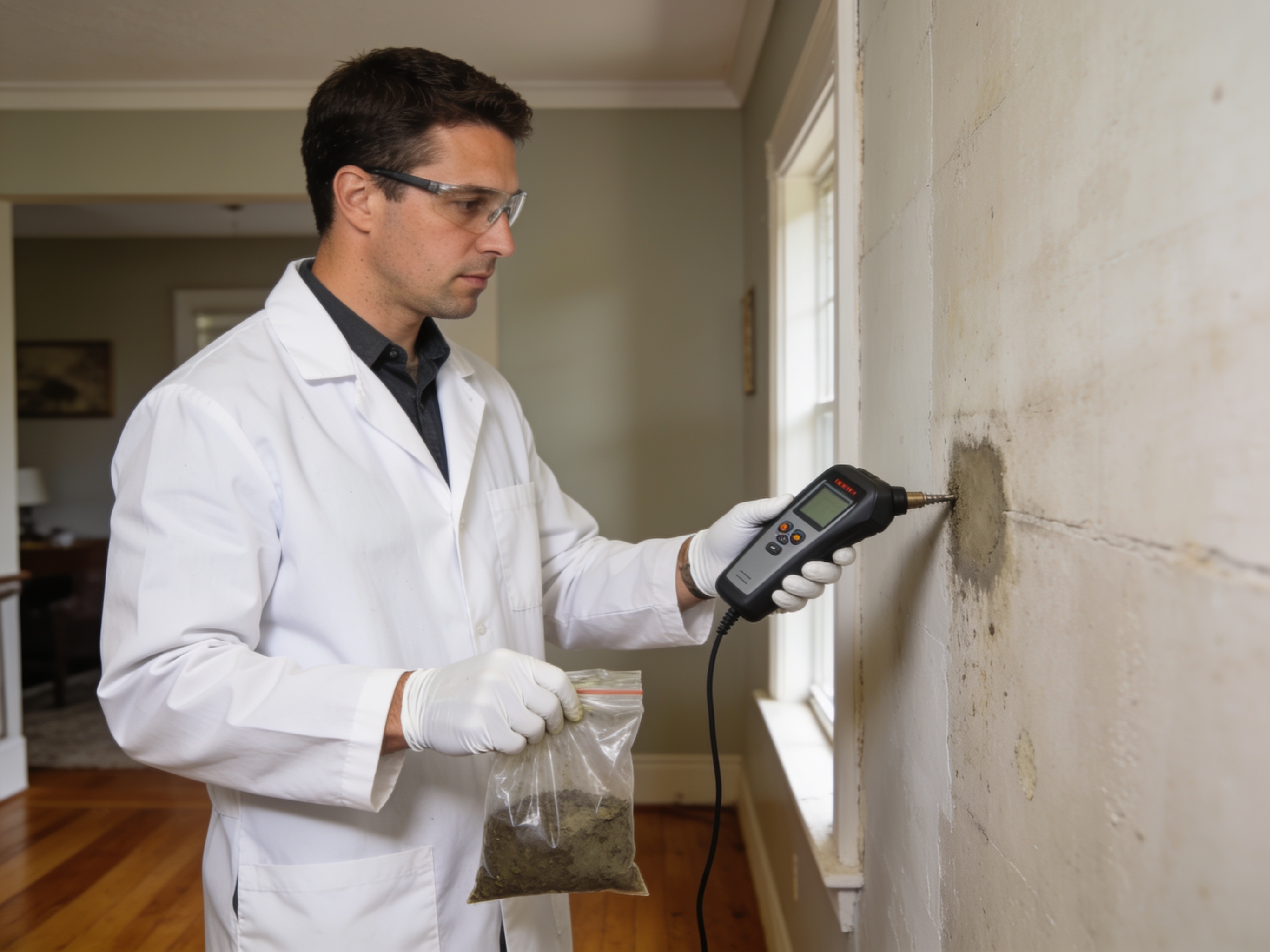
Rochester attics take a beating from a humid continental climate with cold, snowy winters. Warm indoor air leaks into the attic, hits the cold roof deck, and condenses—especially on older Park Avenue and East Avenue houses with original plaster, balloon framing, and thin or missing soffit vents. In Charlotte and near High Falls, lake-effect snow loads and wind-driven moisture make ice dams and wet insulation common. A prevention consultation maps those leaks, measures relative humidity at the ridge and eaves, and flags bath-fan and kitchen-exhaust terminations that dump moisture into the attic instead of outdoors. We look at the actual housing stock: 1920s bungalows in Irondequoit, post-war ranches in Brighton, and newer Pittsford builds that still get it wrong with too-tight envelopes and no dedicated attic ventilation path.
Monroe County code and typical practice expect attics to stay dry enough that mold does not grow on the underside of the roof sheathing. That means balanced intake and exhaust, vapor control on the living-space side, and insulation that does not block the eaves. During a consult we check whether cellulose or fiberglass has been blown over the soffits, whether ridge vents are actually open, and whether bathroom fans are ducted with insulated pipe all the way through the roof. We also note soil and drainage around the foundation—wet basements in low-lying Charlotte lots push moisture upstairs. The goal is a written plan you can act on before the next thaw-freeze cycle, not a sales pitch for removal you may not need yet.
Edge cases we see every season: cathedral ceilings over additions near the George Eastman Museum, where there is no attic to vent; knee-wall attics on East Avenue Victorians that trap humid air behind plaster; and homes that added spray foam without addressing the remaining unvented bays. We photograph and note these so you know what a contractor should not cover up. We also warn against ‘just adding more insulation’ without first stopping air leaks—otherwise you bury the moisture problem. Consultations are scheduled Mon–Fri 8am–6pm or Saturday 9am–2pm from our 1925 S Clinton Ave shop; we come to you in Rochester, Brighton, Irondequoit, and Pittsford.
Technician insight
In Rochester, the thing that catches most people out with a Mold Prevention Consultation is assuming more insulation equals a drier attic. On Park Avenue and East Avenue houses the real problem is warm air leaking past the plaster and condensing on cold sheathing once winter temperatures drop. If you bury those leaks under cellulose without air-sealing first, you just hide the moisture until the next thaw. I always start at the eaves and the bath-fan ducts—that’s where Monroe County winters show up first.
East Avenue knee-wall condensation
Homeowner noticed a musty smell after a heavy snow week but no visible mold yet. We found bath-fan ducts dumping into the knee-wall cavity and insulation packed against the roof deck with no soffit gap. We mapped the wet spots, recommended insulated ducting through the roof and a clear ventilation channel, and left a written sequence so they could hire air-sealing before adding more insulation. Smell dropped after the first cold snap once the fan was re-routed.
Mold Prevention Consultation Services We Offer
✓Attic Moisture Mapping Consultation
Pinpoint where warm air and humidity collect on the roof deck so you can stop condensation before mold takes hold in Rochester winters.
✓Soffit and Ridge Vent Assessment
Check that intake and exhaust actually work on older Monroe County roofs instead of being blocked by insulation or paint.
✓Bathroom Exhaust Termination Review
Confirm fans dump moisture outside, not into the attic—a frequent cause of mold in Park Avenue and East Avenue homes.
✓Insulation Air-Sealing Plan
Identify bypasses around chimneys, plumbing, and wiring so added insulation does not trap moisture against the sheathing.
✓Ice Dam and Snow-Load Prevention Walkthrough
Explain how lake-effect snow and ice dams on Charlotte and Irondequoit roofs drive water into attics and how to break the cycle.
✓Knee-Wall and Cathedral Ceiling Moisture Check
Inspect tight spaces common on East Avenue Victorians and additions where there is little or no vented attic.
Mold Prevention Consultation Cost in Rochester, NY
| Service | Typical Range | What Affects It |
|---|---|---|
| Standard single-family attic consult | $175–$325 | Typical Rochester bungalow or ranch; access from one hatch. |
| Large or multi-level attic | $275–$450 | Victorians, additions, or knee walls that take longer to inspect. |
| Follow-up after insulation or vent work | $125–$200 | Re-check that previous recommendations were done correctly. |
| Saturday consult | $200–$375 | Limited Saturday hours; same scope as weekday visit. |
Ranges are typical for Rochester, NY and confirmed with an exact written quote before any work starts.
How it works
- 1
Schedule And Prep
You book a visit during listed hours. We ask about leaks, ice dams, and recent insulation so we know what to bring.
- 2
On-Site Attic Inspection
We access the attic, measure humidity and temperature at eaves and ridge, and photograph blocked vents, wet insulation, and air leaks.
- 3
Living-Space And Exterior Tie-In
We check bath fans, roof penetrations, and drainage around the house so the plan matches how Monroe County homes actually behave in snow.
- 4
Written Prevention Plan
You receive a clear list of air-sealing, ventilation, and insulation steps—no pressure to buy removal if mold is not present.
Pricing
Consultations are quoted up front after a short phone screen; price depends on attic size, access, and how many roof planes we need to see. No hidden fees.