
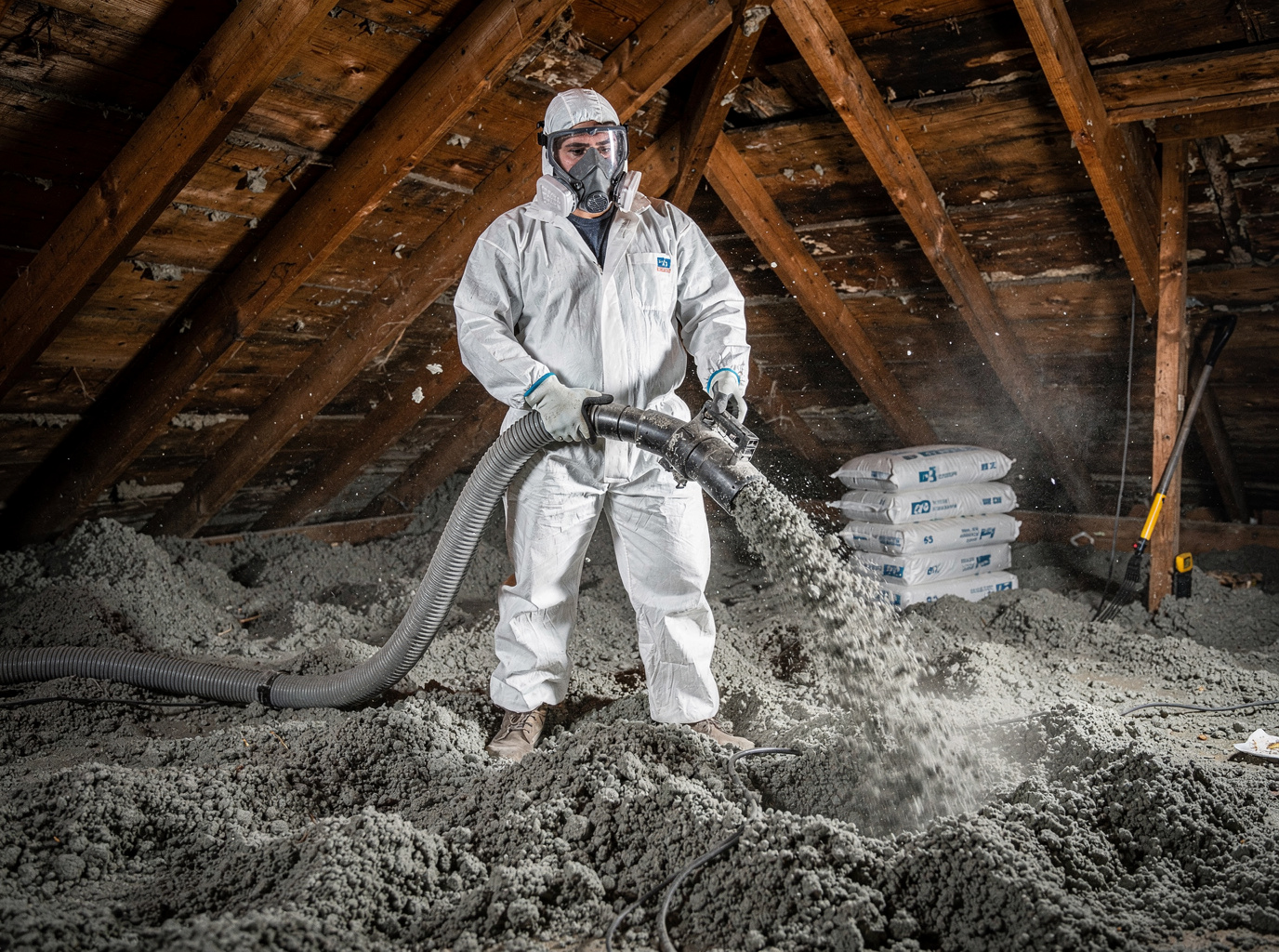
Older Monroe County houses around Park Avenue and East Avenue often received blown cellulose decades ago because it was cheap and filled irregular rafter bays. That recycled-paper fill soaks up the condensation that forms once winter temperatures drop and snow sits on the roof for weeks. In Charlotte and Irondequoit the same pattern appears after lake-effect storms: ice dams push melt water under the shingles and the cellulose turns into a damp mat that never fully dries. We open the attic, bag the material, and haul it out so the wood can be inspected and treated. Hours are Mon–Fri 8am–6pm and Sat 9am–2pm from our 1925 S Clinton Ave shop.
The job is more than a shop-vac. Cellulose packs densely against knee walls and around chimneys; leaving even a thin layer keeps humidity high and can re-wet new batts. We use negative-air machines and HEPA vacuums so dust stays out of living spaces below, especially in tight Brighton and Pittsford colonials. After the fill is gone we check for staining on the underside of the roof deck—the tell-tale of repeated ice-dam leaks common near High Falls and the George Eastman Museum district. If mold is present on the wood we isolate that work rather than mixing it with the insulation haul. Disposal follows Monroe County rules for construction debris; we do not dump it in household trash.
Homeowners sometimes try to scoop the material themselves and end up spreading spores through the house. The paper fibers also hide wiring and old knob-and-tube that must be spotted before any new insulation goes in. We document the empty bays so you can see exactly what was removed. Replacement insulation is a separate decision; our role on this service is simply to get the wet cellulose out cleanly so the attic can dry and the next step—whether mold treatment or new fill—starts from a known surface.
Technician insight
In Rochester the thing that catches most people out with cellulose insulation removal is how long the paper stays wet after a January thaw. Homes near Charlotte and Irondequoit get lake-effect snow that sits, then melts under the shingles; the cellulose wicked that moisture months ago and still feels damp in March. Homeowners often think a shop-vac afternoon will fix it, but the fibers are packed against the chimney and the dust goes everywhere. We open it up, bag it, and let the wood actually dry before anyone talks about new insulation.
Wet cellulose after ice dams near Park Avenue
A homeowner called after noticing a musty smell each time the attic hatch opened following a heavy snow week. We found cellulose packed six inches deep that was still damp along the north rafter line where ice dams had pushed water under the flashing. We set containment, vacuumed and bagged the fill, and left the deck exposed so it could dry. The smell dropped once the wet paper was gone and the wood could be checked for staining.
Cellulose Insulation Removal Services We Offer
✓Attic Cellulose Vacuum Extraction
HEPA vacuuming of loose-fill cellulose from rafter bays so residual fibers do not keep the deck damp.
✓Mold-Contaminated Cellulose Bag-Out
Contained removal of paper insulation that has already grown visible mold, keeping spores out of living rooms below.
✓Wet Cellulose After Ice-Dam Leaks
Targeted extraction of saturated cellulose following snowmelt on older East Avenue and Park Avenue roofs.
✓Knee-Wall and Chimney Chase Clean-Out
Hand and vacuum work in tight spaces where cellulose packs against masonry and never dries.
✓Historic Home Cellulose Strip
Careful removal in pre-war Brighton and Pittsford houses so original plaster and wiring stay undisturbed.
✓Dense-Pack Cellulose Demolition
Breaking up and bagging compressed cellulose that was blown into walls or sloped ceilings.
Cellulose Insulation Removal Cost in Rochester, NY
| Service | Typical Range | What Affects It |
|---|---|---|
| Small attic (under 800 sq ft, dry cellulose) | $700–$1,400 | Easy hatch access and no visible mold keep the low end. |
| Typical two-story attic, some moisture | $1,200–$2,400 | Ice-dam staining or packed knee walls add time and bags. |
| Large or finished-attic space | $2,000–$3,800 | Multiple levels, dense-pack, or limited parking on East Avenue streets raise labor. |
| Add-on mold-wood inspection after removal | $150–$350 | Only if staining is found on the deck; not a full remediation. |
Ranges are typical for Rochester, NY and confirmed with an exact written quote before any work starts.
How it works
- 1
Attic Assessment
We inspect from the hatch, note wet spots, wiring, and how far the cellulose has packed into corners before any equipment comes in.
- 2
Containment and Negative Air
Plastic barriers and a HEPA air scrubber keep dust from drifting downstairs while we work.
- 3
Vacuum and Bag Removal
Industrial vacuums pull the cellulose into sealed bags; remaining pockets are scooped by hand.
- 4
Debris Haul and Surface Check
Bags leave the site the same day; we photograph the empty bays so you can see remaining stains or mold on the wood.
Pricing
Most Rochester attics fall in a mid-range based on square footage, access, and how wet the cellulose is; we give an on-site figure after looking at the hatch and the depth of the fill.