Rochester attics collect Aspergillus when humid-continental winters dump snow on roofs, ice dams form along eaves, and meltwater soaks insulation and sheathing. Homes around Park Avenue, East Avenue, and Charlotte often date to the early 1900s: balloon framing, limited soffit vents, and cellulose or fiberglass that stays damp once wet. We open the hatch, map staining on the north-facing rafters (the coldest plane), and check for the powdery green-gray colonies Aspergillus prefers on organic dust. Work starts only after we confirm the source—usually a roof leak or blocked ridge vent—because killing spores without drying the deck is wasted effort in this climate.
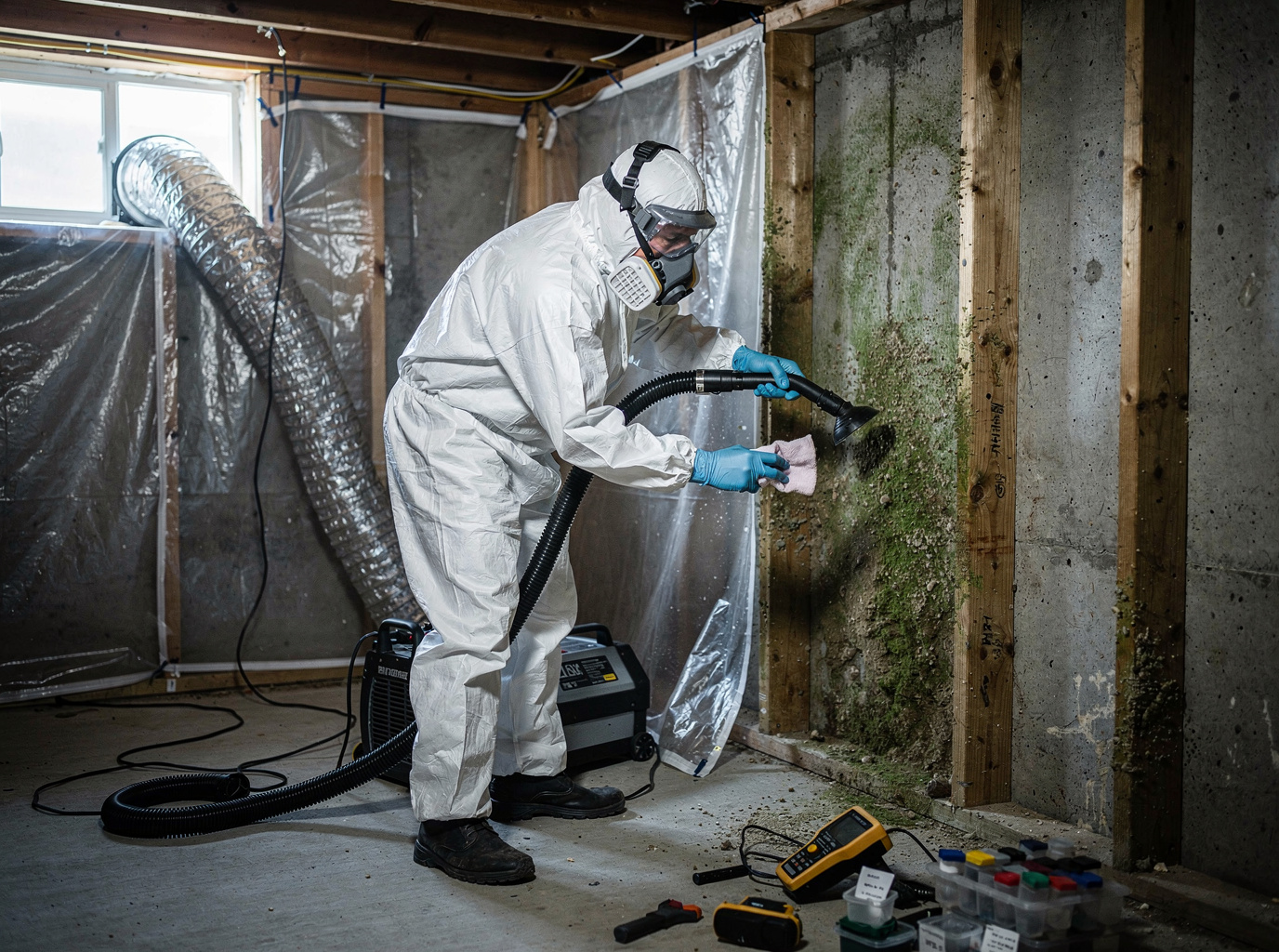
Containment in a tight Rochester attic is different from a basement job. We hang poly from the rafters, negative-air the space through a window or gable, and bag insulation so it does not drop into living rooms below. Older plaster ceilings in East Avenue houses crack easily; we shore them before we pull wet batts. After removal we HEPA-vac every joist bay, then apply an EPA-registered antimicrobial that stays on wood, not just the surface. We do not fog and leave; we wait for moisture readings to drop below 15 percent before we even talk about new insulation. Monroe County winters will re-wet anything still damp.
Nearby Brighton, Irondequoit, and Pittsford share the same lake-effect snow and freeze-thaw cycles, so the same ice-dam pattern shows up on ranch roofs as on Victorian ones. Soil around High Falls and the river corridor stays wet; that humidity creeps into attics through unsealed chases. We always inspect the bathroom and kitchen stacks that punch through the attic—those are the hidden moisture chimneys. If you smell must after a January thaw, that is usually Aspergillus already colonizing the backside of the drywall. We document everything with photos you can keep; you inspect the workmanship before we close the hatch.
Seasonal Timing and Ice-Dam Reality
Schedule Aspergillus work in late winter or early spring once the heavy snow load is off the roof but before summer humidity locks moisture in. Ice dams along the eaves of Park Avenue and Charlotte houses dump water into the attic every thaw; waiting until July means the mold has already eaten into the sheathing. We work Monday–Friday 8am–6pm and Saturday 9am–2pm from 1925 S Clinton Ave so we can get in while the wood is still cold and dry enough to treat.
Technician insight
In Rochester the thing that catches most people out with Aspergillus remediation is treating the attic in July after the ice-dam water has already sat in the insulation all winter. By then the colonies have gone deep into the north-side sheathing of those old Park Avenue and Charlotte houses. We want to get in while the wood is still cold and the snow load is off—otherwise you are just painting over a sponge that Monroe County humidity will re-wet.
East Avenue colonial after a January thaw
Homeowner noticed a musty smell in the upstairs hall after a heavy lake-effect snow melted. We found soaked cellulose along the north eaves and powdery Aspergillus on the rafters where an ice dam had overflowed. We contained the hatch, bagged the wet insulation, HEPA-vacced the bays, treated the wood, and confirmed moisture was down before new insulation went in. Smell was gone and the plaster ceiling stayed intact.
Aspergillus Remediation Services We Offer
✓Attic Aspergillus Inspection and Mapping
Visual and moisture-meter survey of rafters, insulation, and sheathing in Rochester attics to locate Aspergillus colonies before any demolition starts.
✓Contained Aspergillus Removal
Negative-air containment, bagging of contaminated insulation, and careful extraction so spores do not drop into living spaces below older plaster ceilings.
✓HEPA Vacuum and Surface Cleaning
Full HEPA vacuum of joist bays and wood after removal, followed by damp-wipe of remaining Aspergillus residue on rafters and decking.
✓Antimicrobial Treatment of Wood
Application of a residual antimicrobial to treated lumber so new colonies cannot take hold once Monroe County humidity returns.
✓Wet Insulation Tear-Out and Replacement
Removal of soaked cellulose or fiberglass and installation of dry, properly vented insulation after the deck is confirmed dry.
✓Ice-Dam Moisture Source Correction
Identification and sealing of the roof or venting failures that let meltwater into attics after lake-effect snow.
✓Post-Remediation Moisture Verification
Follow-up moisture readings and photos so you can see the wood is dry before we close the attic hatch.
Aspergillus Remediation Cost in Rochester, NY
| Service | Typical Range | What Affects It |
|---|---|---|
| Attic inspection and moisture mapping | $150–$350 | Access difficulty and number of bays; includes photos |
| Small contained removal (one or two bays) | $800–$1,800 | Insulation type and how wet the deck is |
| Full attic Aspergillus remediation | $2,000–$5,500 | Square footage, plaster protection, and replacement insulation |
| Antimicrobial treatment only (after dry-out) | $250–$600 | Linear feet of rafters treated |
| Insulation tear-out and dry replacement | $1.50–$4.00 per sq ft | Depth, blown vs batt, and access |
Ranges are typical for Rochester, NY and confirmed with an exact written quote before any work starts.
How it works
- 1
Inspect And Confirm The Source
We enter the attic, map staining and moisture, and identify whether ice dams, a roof leak, or stack condensation is feeding the Aspergillus. No treatment until the water path is understood.
- 2
Contain And Isolate The Space
Poly barriers and negative air keep spores from traveling into the house. We protect plaster ceilings common in East Avenue and Park Avenue homes.
- 3
Remove Contaminated Material
Wet insulation is bagged and hauled; wood is HEPA-vacced and treated. We work until moisture meters read dry enough for this climate.
- 4
Dry, Treat, And Verify
Antimicrobial goes on after drying. You inspect the bays with us before new insulation or the hatch is closed.
Pricing
Most Rochester attic Aspergillus jobs fall in a range driven by square footage of wet insulation, how many rafter bays are involved, and whether the roof leak or ice-dam issue must be addressed first. We give a written scope after we see the hatch—no surprise extras.